As we move through the final days of December, I’m three days behind sharing my reflections on Kwanzaa. I didn’t grow up celebrating Kwanzaa, a secular holiday from December 26 to January 1 that offers a moment to reflect, rejoice, and recommit to key cultural and community principles. Last year was the first time I immersed myself in the heart of Kwanzaa, volunteering for a festival and creating my first activity packet. This deep dive enriched my understanding of community and culture and connected me to the holiday’s profound meanings.
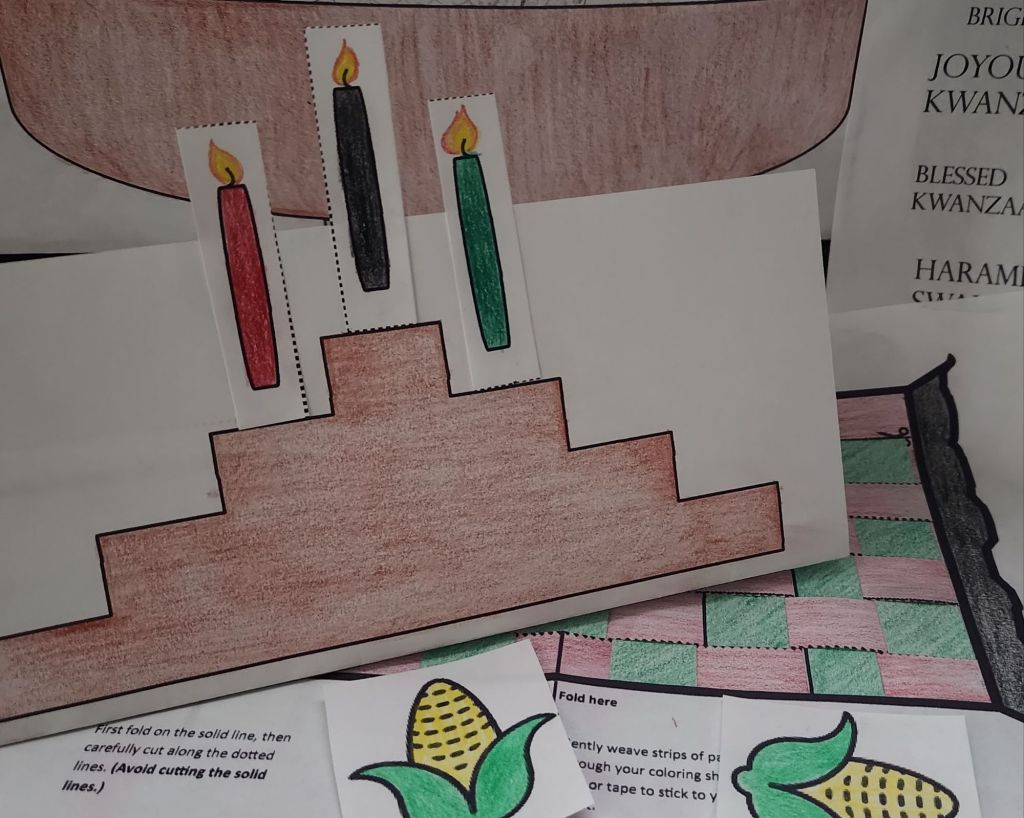
Kwanzaa is a vibrant celebration of unity, self-determination, collective work, cooperative economics, purpose, creativity, and faith. Each symbol and candle is a testament to the rich heritage of African ancestry. However, my journey into understanding Kwanzaa wasn’t without its complexities, particularly when it came to its founder, Dr. Maulana Karenga.
In delving into Kwanzaa’s history, I encountered a complex narrative surrounding Dr. Karenga. Amidst the cloud of controversy and accusations from his past, I found myself navigating a mix of bias and speculation. Despite the crimes for which he was convicted, Karenga has consistently claimed to be a political prisoner. Given the historical context of the treatment of African American leaders during his time, his assertion doesn’t seem far-fetched. This realization propelled me to focus on Kwanzaa’s essence — its celebration of African ancestry, culture, and unity — rather than the individual controversies. It’s a stark contrast to the blind celebration of holidays like Christmas, which, despite its association with historical atrocities and the complex legacy of Christianity, remains widely embraced. My choice to celebrate Kwanzaa is a conscious step to honor the cultural values it represents, acknowledging that its founder’s history doesn’t negate the holiday’s positive impact.
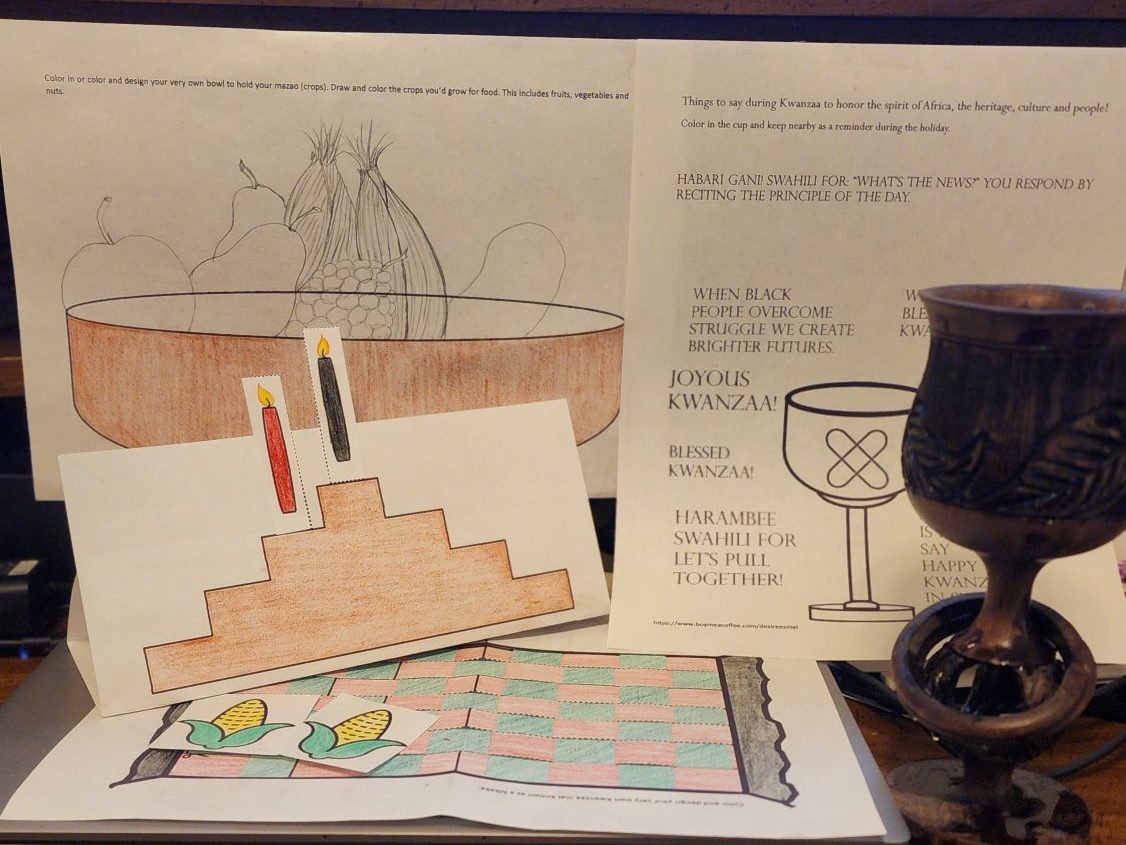
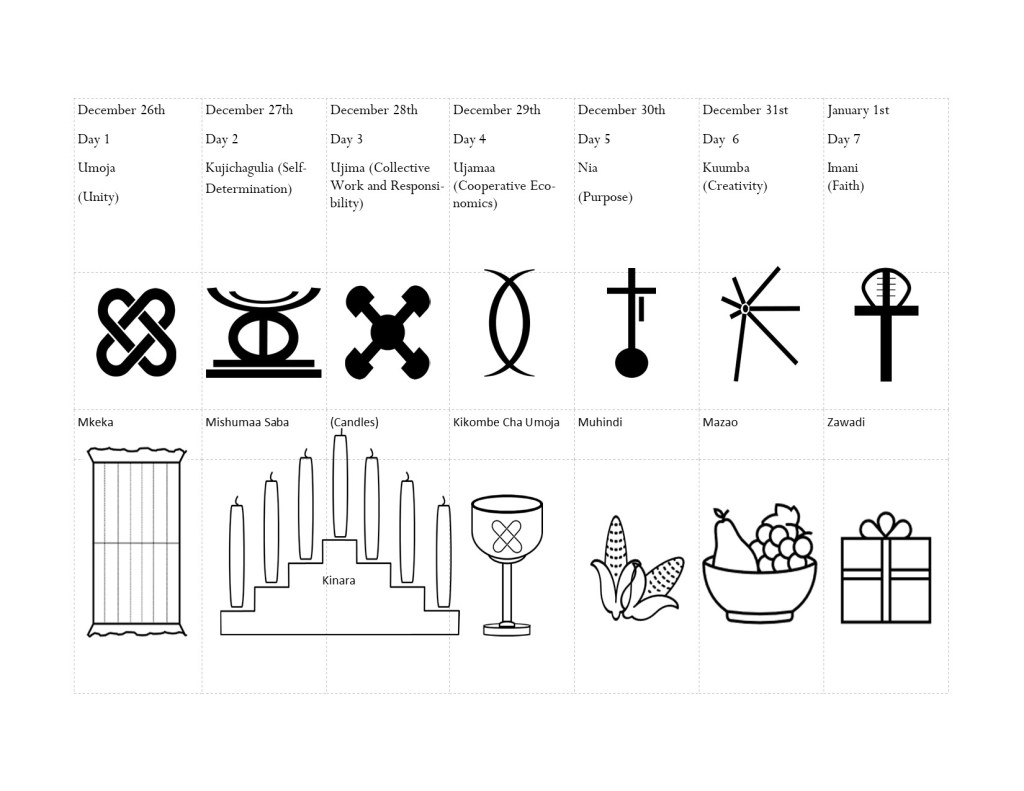
Kwanzaa, established in 1966 amid the Black Freedom movement, affirms African-American culture and universal values. The Seven Principles or Nguzo Saba guide the community toward a collective and individual sense of purpose and progress. The symbols of Kwanzaa — the Mkeka, Kinara, Mishumaa Saba, Mazao, Kikombe cha Umoja, and Zawadi — are rich with cultural significance, each contributing to the holiday’s overarching themes of unity, heritage, and commitment.
The week-long celebration is punctuated by music, dance, poetry, narratives, and the striking ritual of lighting the Kinara. Each day offers a moment to reflect on one of the seven principles, embedding them into daily life. Kwanzaa culminates in a day of reflection and recommitment, often marked by a Karamu feast, where individuals reaffirm their dedication to the Nguzo Saba and their community.
This reflection brings me to the core of my message: Kwanzaa is an ‘ALL-iday.’ It’s a universal call to embrace unity, community, and the rich cultural heritage of Africa, transcending racial and national boundaries. It’s about embodying the principles that Kwanzaa promotes, which resonate with all who seek to understand and appreciate the values of unity, self-determination, and collective progress.
As I anticipate celebrating Kwanzaa with my future family, I continue to spread its message and joy. My activity packet, available for anyone embarking on this cultural journey, is just one way to engage with Kwanzaa’s principles. I invite everyone to explore, learn, and incorporate the spirit of Kwanzaa into their lives, making this ‘ALL-iday’ a part of our collective experience.
Join me in embracing the spirit of Kwanzaa. As we celebrate this holiday season, let us uphold the values of unity, culture, and community that are crucial in today’s world. Happy ‘ALL-idays’ to all, and may this time bring us closer to the ideals we cherish and the people we hold dear.
AI transparency and ethics note: This blog has been reviewed and edited with the assistance of Chat GPT-4 technology to enhance punctuation, grammar, and readability.

 finding himdag